
This tool measures how close the UK is to meeting its near-term net zero goals. It shows two measurements of progress: projected emissions reductions and spending commitments.
It will be updated as government makes carbon reduction and spending commitments ahead of COP26.

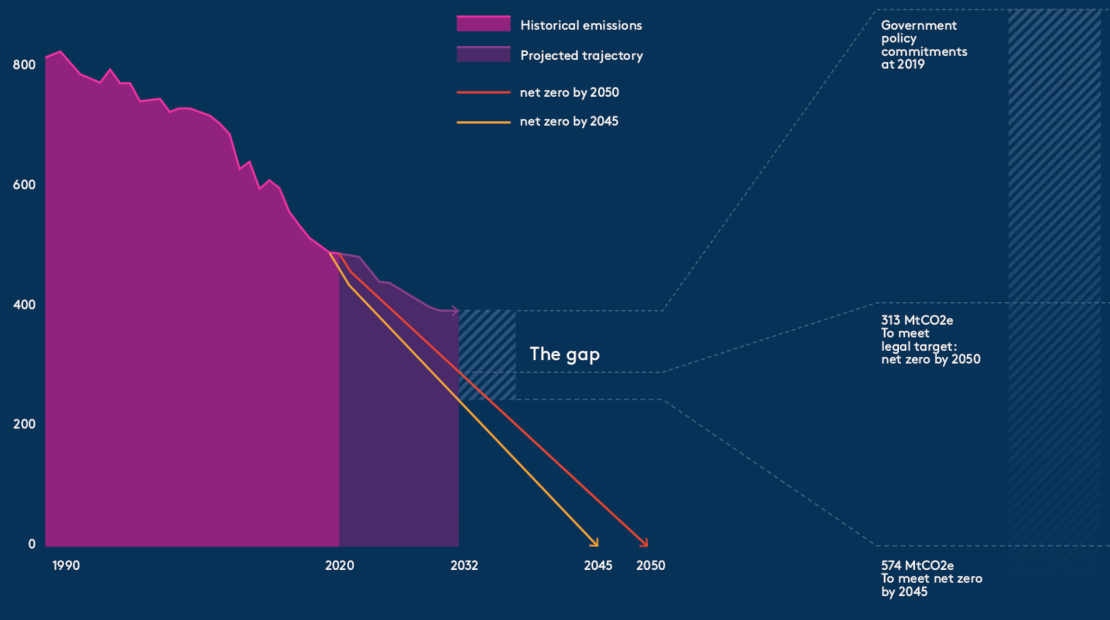
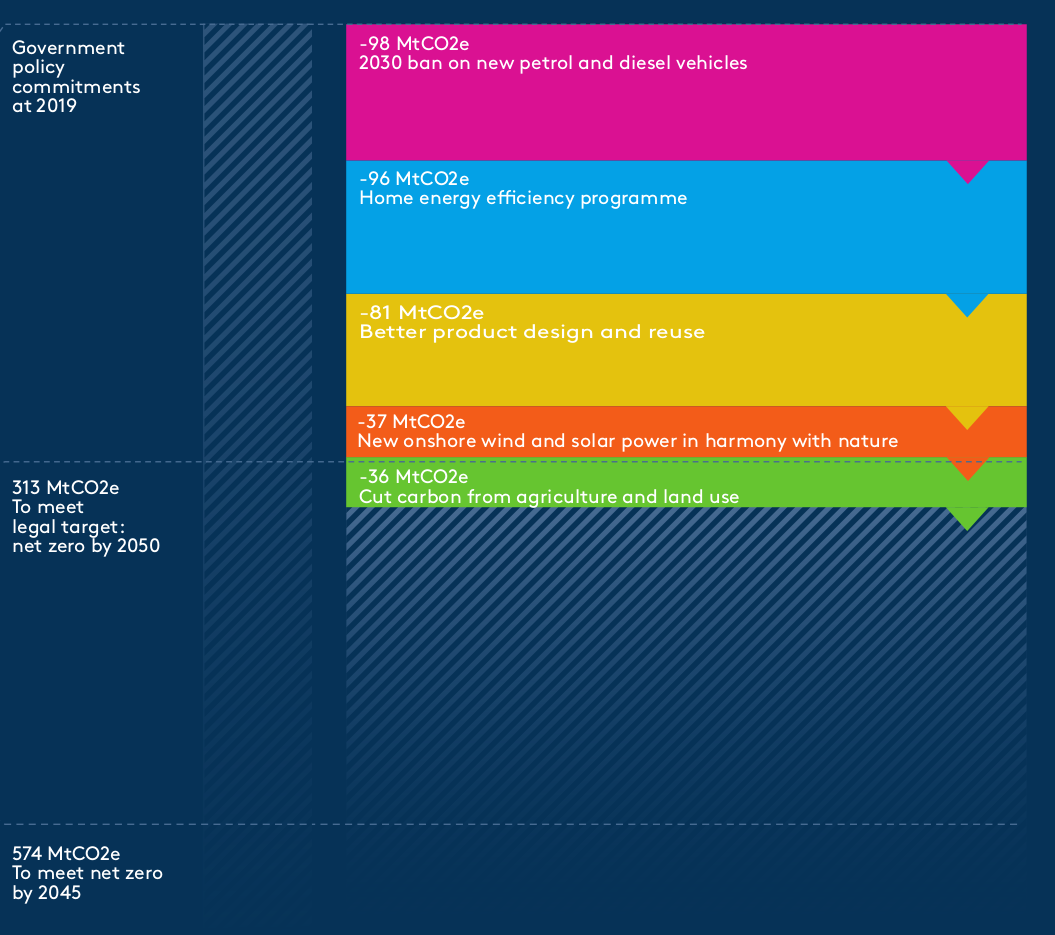
This analysis is based on work published in Acting on net zero now, and forms part of Green Alliance's Cutting Carbon Now programme. All figures refer to the 5th carbon budget period (2028-2032). The underlying research is based on the following reports:
Technical analysis : ‘How the UK can stop contributing to Climate Change’ (November 2018)
Policy 1 Transport sector: ‘How the UK can lead the electric vehicle revolution’ (March 2018)
Policy 2 Domestic buildings sector: Reinventing Retrofit (February 2019)
Policy 3 Nature Restoration: Cutting the climate impact of land use (April 2019)
Policy 4 Industry: By popular demand (November 2018); Less in, more out (November 2018)
Policy 5 Power: ‘Closing the clean power gap (September 2017);
For information about the public mandate to act on these policies, see: Power to the people (July 2019)
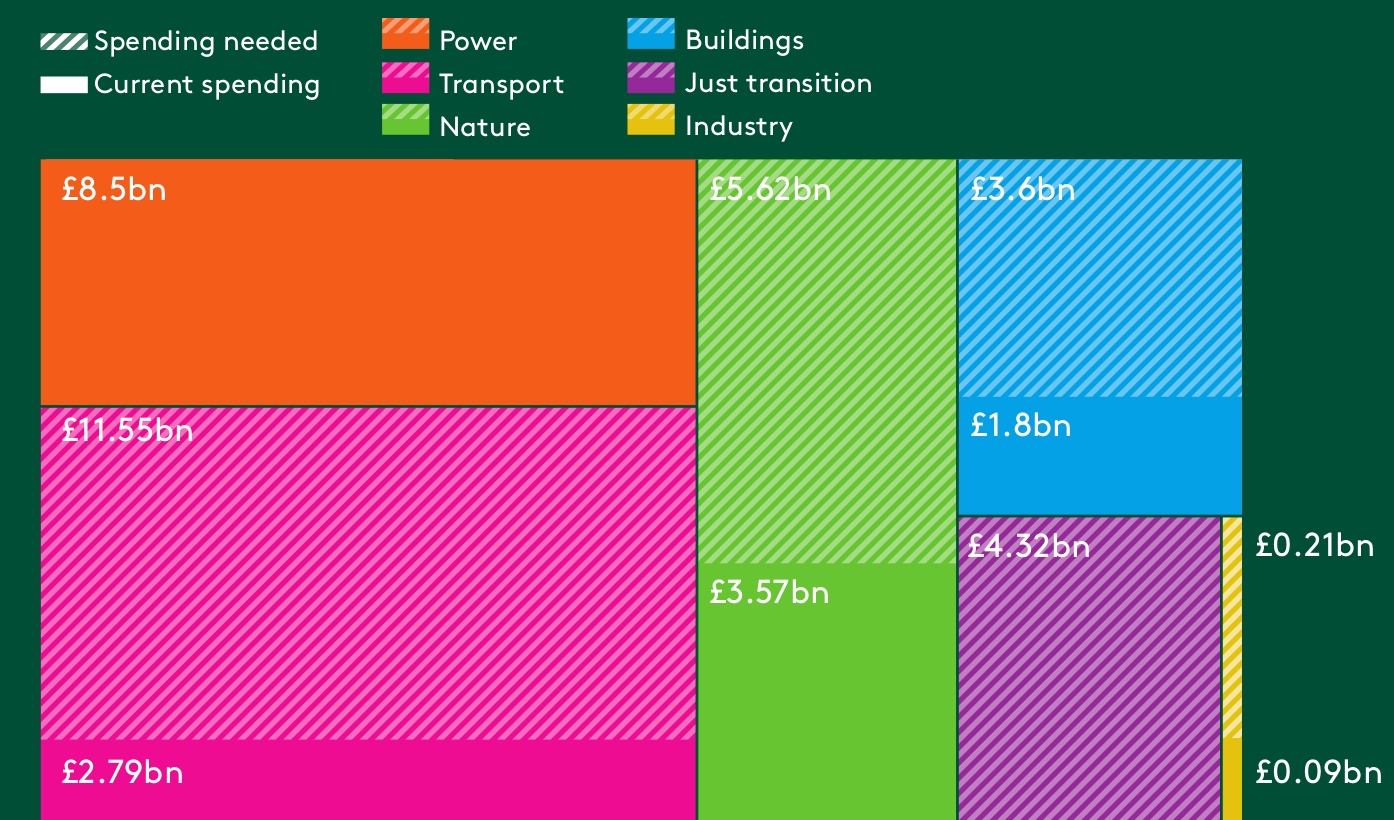
This analysis is based on work published in Government investment for a greener and fairer economy. The analysis outlines the scale of spending needed to address the climate and nature emergency, and so covers a broader analysis of the UK's the environmental challenge than simply net zero. In total, it sees around 2% of GDP being allocated to the task. The key spending provisions are outlined below.
| Current spending | New spending needed | Total | |
|---|---|---|---|
| Power | £8.5bn | - | £8.5bn |
| Transport | £2.79bn | £11.5bn | £14.33bn |
| Nature | £3.57bn | £5.62bn | £9.19bn |
| Buildings | £1.8bn | £3.6bn | £5.4bn |
| Just transition | - | £4.32bn | £4.32bn |
| Industry | £0.09bn | £0.207bn | £0.3bn |